How long does an air conditioner usually last?
Most central AC systems last about 12 to 15 years. Coastal air, heavy use, and poor upkeep can shorten that. A provider can check yours.
AC and furnace help in Orlando and the Orlando area
Request an estimate for a new AC
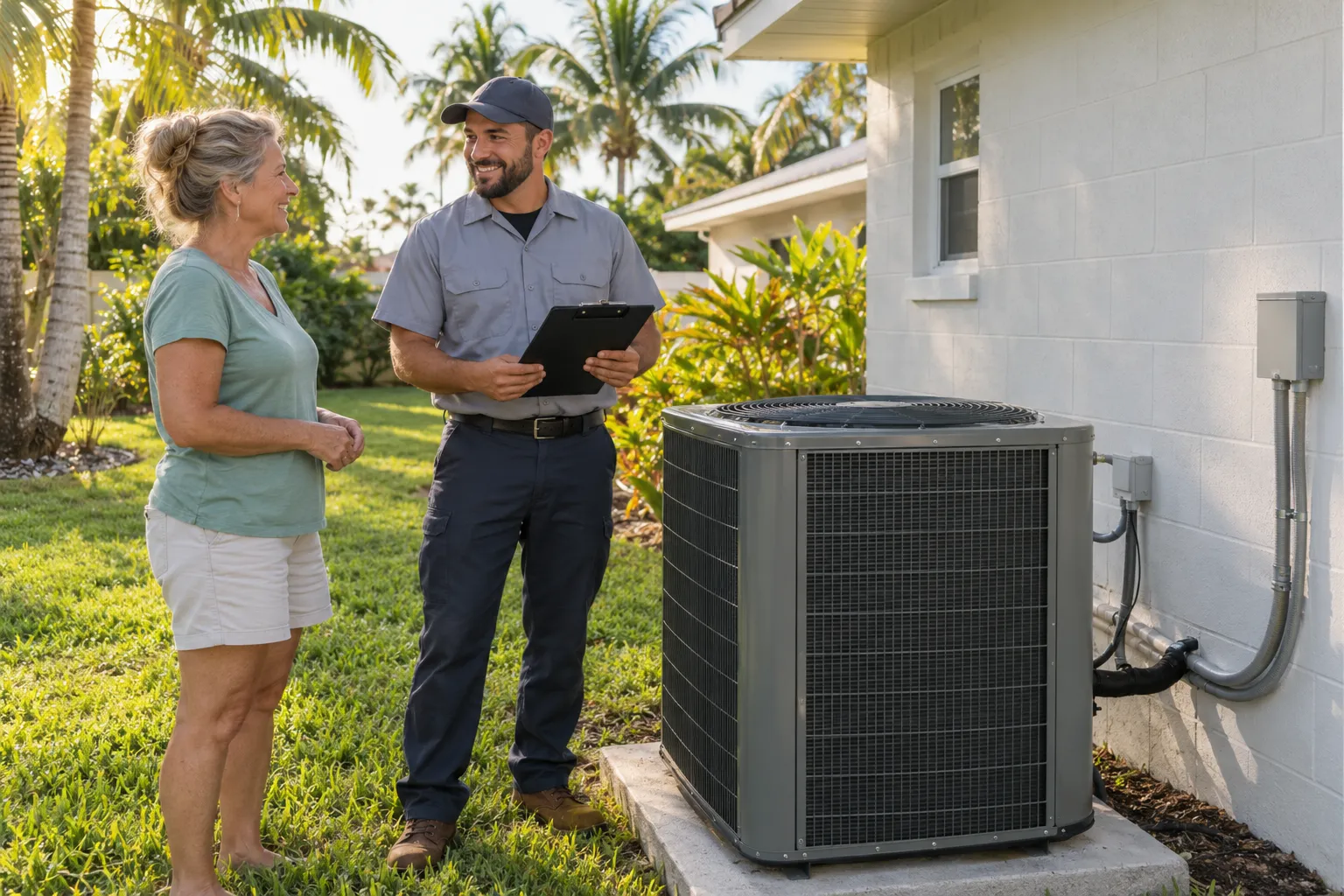
Is your AC too old, too loud, or too costly to keep fixing? A new system can bring back steady comfort. It can also cut the strain on your wallet in a place where the air conditioner runs most of the year.
Enforcementcombined Heating & Air is a referral service. We do not install anything ourselves. We connect homeowners in Orlando and the Orlando area with independent providers in our network. Those providers look at your home, size the system, and handle the install. Ask first, then act. This page walks you through the signs, the system types, sizing, and the questions worth asking before you say yes.
Take a breath. Turn the thermostat to off and check the breaker. Move to the coolest room and drink plenty of water.
If the unit is old and keeps failing, a new system may make more sense than another patch. A local provider can look at it and tell you straight. If it only needs a fix, ask about emergency AC repair instead. The provider will help you sort out which path fits.
Providers do the work. Enforcementcombined Heating & Air only connects you.
Your system usually gives hints before it quits. Watch for these:
One sign alone may not mean much. Two or three together are worth a conversation.
Here is a simple way to think about it. If a repair costs close to half the price of a new system, and the unit is already old, replacing often wins. A newer system also tends to need fewer surprise visits.
Ask the provider to explain both options in plain words. A good one will not rush you.
There are a few common types. Each fits a different home.
Your provider can tell you which one suits your house and your budget.
Bigger is not better. Here is why.
A unit that is too big cools the air fast and shuts off. It never runs long enough to pull moisture out. The house feels cold and damp. A unit that is too small runs all day and still falls behind.
In a humid climate, getting the size right is a big deal. Ask the provider to do a load calculation. That looks at square footage, windows, insulation, ceiling height, and sun exposure. A quick guess based on the old unit is not enough.
A proper job has many steps. Expect your provider to cover:
In storm country, ask how the outdoor unit will be strapped down for high winds.
Yes, they should. Parts built to work as a pair run better and last longer. Mixing old and new pieces can waste energy and cause early wear.
Also ask about your ducts. In many homes built from the 1970s to the 2000s, ducts in hot attics leak or sag. A fine new unit pushing air through leaky ducts will disappoint you. The provider can check them while on site.
Look for the SEER2 number. A higher number means the system uses less power to cool your home. It also usually costs more up front.
When your AC runs most of the year, the savings can add up. Variable-speed models also handle humidity more smoothly. Ask the provider to show you two or three choices side by side, with the price and the likely running cost for each.
Buyers and inspectors look at the age and condition of the AC. A newer, properly installed system is a clear plus. Keep the paperwork, permit records, and warranty papers in one folder. They help when you sell.
A sloppy job can cause damp spots, mold, or a unit that fails early. Doing it right protects the home.
Storms can also damage equipment. Some policies may cover sudden damage, so check your policy. Providers can often help document damage for a claim.
Write these down before the visit:
Get the answers in a written quote.
Here is the honest answer. Enforcementcombined Heating & Air is a referral service. You can request an estimate or Request a callback to check provider availability. We pass your details to an independent provider in our network. That provider contacts you, visits, and sets the price. Hours vary by provider. Enforcementcombined Heating & Air does not do the work and does not set the quote.
A provider checks your space, ducts, and electrical setup before suggesting any system for your home.
A load calculation helps match the system to your rooms, windows, and local humidity.
Old equipment comes out, new equipment goes in, and lines, drains, and wiring get connected.
The provider checks airflow and cooling, then shows you how everything works.
Prices change with home size, system type, and the shape of your ducts. These are typical U.S. ranges only. Always ask for a written quote from the provider before work begins.
| Item | Typical range | Notes |
|---|---|---|
| Central AC replacement (split system) | $5,000 – $12,000 | Depends on size, brand, and efficiency |
| Heat pump system | $6,000 – $15,000 | Cools and heats; costs vary by type |
| Ductless mini-split (single zone) | $2,000 – $5,000 | Good for additions or homes without ducts |
| Packaged unit | $5,500 – $11,000 | All parts in one cabinet |
| Ductwork repair or sealing | $500 – $2,500 | Depends on access and how much is leaking |
| New thermostat | $150 – $600 | Smart models cost more |
Tell us about your home and your cooling problem using the request form, or Request a callback.
A local provider in our network gets in touch to talk through your situation.
The provider visits, looks over your home, and gives you a written quote to compare.
If you say yes, you and the provider agree on a date and the scope.
Talk with a local provider about your options before you sign anything or pick a system.
We connect you with providers. They do the work and set the price.
A properly sized, well-installed system helps your home stay comfortable and hold its value.
Providers in our network know the heat, humidity, and storm needs of homes nearby.
Most central AC systems last about 12 to 15 years. Coastal air, heavy use, and poor upkeep can shorten that. A provider can check yours.
If your unit is over 12 years old and a repair costs close to half the price of a new one, replacing often makes more sense. A provider can walk through both options and give you written numbers.
Many areas require a permit for AC replacement. The provider usually knows local rules and can explain what applies. Ask whether permits are included in your written quote.
Have a question about AC repair, a replacement, or a furnace? Request a callback to check provider availability, or send a request and share a few details.
No obligation